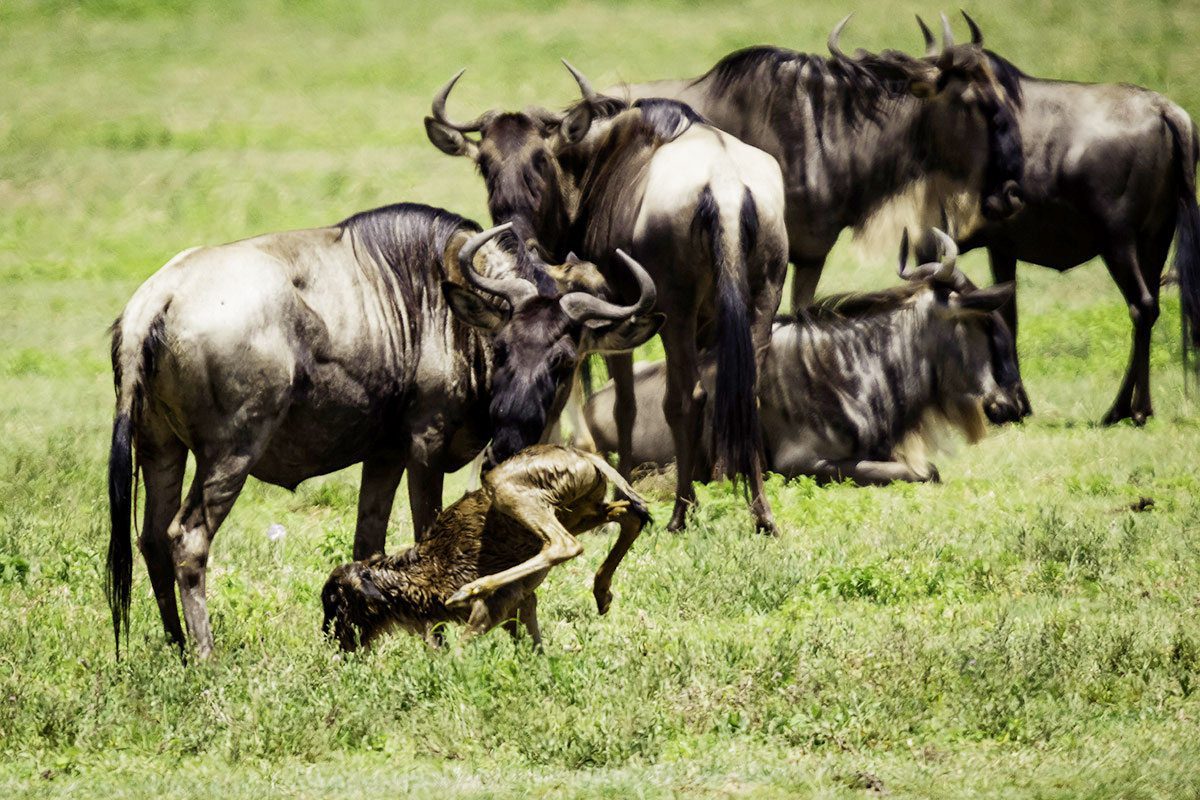
Tanzania wildebeest Calving season
Wildebeest Calving Season, Ndutu Serengeti
One of nature's most magnificent shows is the Great Wildebeest Migration. takes place across East Africa's wide savannas, mostly in Tanzania and Kenya. The calving season is a unique highlight of the migration, which occurs all year round. Amazing time of year when thousands of calves are born to wildebeest, bringing vibrancy and vitality to the plains.
The southern Serengeti region of Tanzania has the annual Serengeti calving season, also referred to as the "time of mass birth," from January to early March. In January or February, after the rains have progressively stopped, wildebeests and other species start to breed.
The availability of food sources, surrounding greenery, and lush grass all contribute to the population increase among these wildlife species, with an average of 8,000 younglings added per day by wildebeests.
Season of Serengeti Calving | Migration of Wildebees
Over 1.5 million wildebeest travel in a cyclical manner throughout the Great Wildebeest Migration. Moving in quest of more fertile pastures, along with gazelles and zebras. Over a distance of around 1,800 miles, this massive migration travels in a continuous loop between the Serengeti National Park in Tanzania and the Maasai Mara National Reserve in Kenya.
The Calving Season's Timing:
A crucial time of the migration is the calving season, which usually lasts from late January to early March. In Tanzania's Ngorongoro Conservation Area and the southern Serengeti, wildebeest gather during this period. In addition, the Ndutu area is a component of the larger Serengeti ecosystem.
Environmental Elements That Affect Calving
Environmental cues have a significant influence on when the calving season occurs. Naturally, the wildebeest gravitate toward patches of lush, nourishing grass. It is essential for the health of the pregnant women and the subsequent feeding of their young. The excellent soils and plentiful rains of the southern Serengeti plains make it the perfect place for wildebeest to give birth.
The Tragic Story of the Plains Birth:
The calving season is a display of survival and life. Large herds of pregnant wildebeest congregate, and as the females give birth, the plains burst into an explosion of fresh life. In a matter of minutes, the calves of wildebeest show that they have the natural capacity to keep up with the herds in motion, which is crucial for avoiding potential predators.
Dynamics of Predators and Prey:
Predators also have an abundance of prey during the calving season. In stark contrast to the joyous birth scenes, lions, cheetahs, and hyenas are aware of the vulnerable young calves. An important component of the circle of life is the interaction between predator and prey, which gives the movement a degree of drama and intensity.
How Vital Water Sources Are
A vital component during the calving season is water. To relieve their thirst and give the young calves a comfortable environment, wildebeest depend on water sources that are readily available. During this time, the ndutu region, with its many seasonal waterholes, becomes a hub for the herds.
The Region of Ndutu: A Calving Hotspot
The Ngorongoro Conservation Area's Ndutu region is a calving hotspot. Wildebeest find it to be a desirable location during this critical time because to its large meadows and plenty of water. The noises of newborn calves and the protective gaze of their mothers flood the Ndutu plains, turning them into a sort of nursery.
Conservation Areas' Role:
The preservation of the Great Wildebeest Migration's natural processes is greatly aided by conservation areas such as Ngorongoro. The wildebeest have the space and resources needed to complete their historic migratory patterns, which includes the breathtaking calving season, thanks to the conservation and management of these habitats.
Climate Variability's Effects:
The Effects of Variability in the Climate:
The timing and severity of the calving season can be affected by patterns in the climate. A fluctuating temperature or erratic rainfall can impact the availability of nutrient-rich grass. possibly having an impact on the location and length of the calving season. Understanding these dynamics and advancing the migration's long-term conservation depend heavily on climate research.
The Guests' Unforgettable Experience:
The calving season is a singular chance for photographers and wildlife enthusiasts to capture the unadulterated beauty of the natural world. Visitors on safaris might witness the touching scenes of a wildebeest giving birth. The calves' playful antics and the predators' cunning when they're hunting. The multiplicity of life set against the backdrop of the plains of East Africa makes for an incredibly memorable encounter.
Challenges and Efforts in Conservation:
While the wildebeest population's tenacity is demonstrated by the calving season. It also draws attention to the continued difficulties they face in conservation. Threats to migration include habitat loss, hunting, and the possible effects of climate change. In order to solve these issues, local governments and conservation organizations are essential. ensuring this marvel of nature's long-term survival.
Ten Pointers to Enjoy the Best Possible Migration Calving Season
Time is Important
Select the Proper Location
Flexible Schedule
Make Hotel Reservations Initial Expert Guides
Incorporate Balloon Safaris
One virtue is patience.
Make a reservation with a Reputable and Skilled Safari Operator
Maintain a Reasonable Budget.
Pack Suitably:
Bring appropriate attire for both warm days and cool evenings, binoculars, and a good camera. Remember to use insect repellant and sunblock.
Finally, a safari during the wildebeest calving season
The Great Wildebeest Migration's calving season is a symphony of life and death. And rebirth throughout the vast plains of East Africa. It is evidence of these amazing animals' exceptional adaptability and instincts. For those who have the good fortune to see this show.
An unforgettable chapter in the big migration's history is written during the calving season. A story that changes every year and fills the Serengeti with the vivid colors of survival and life.
